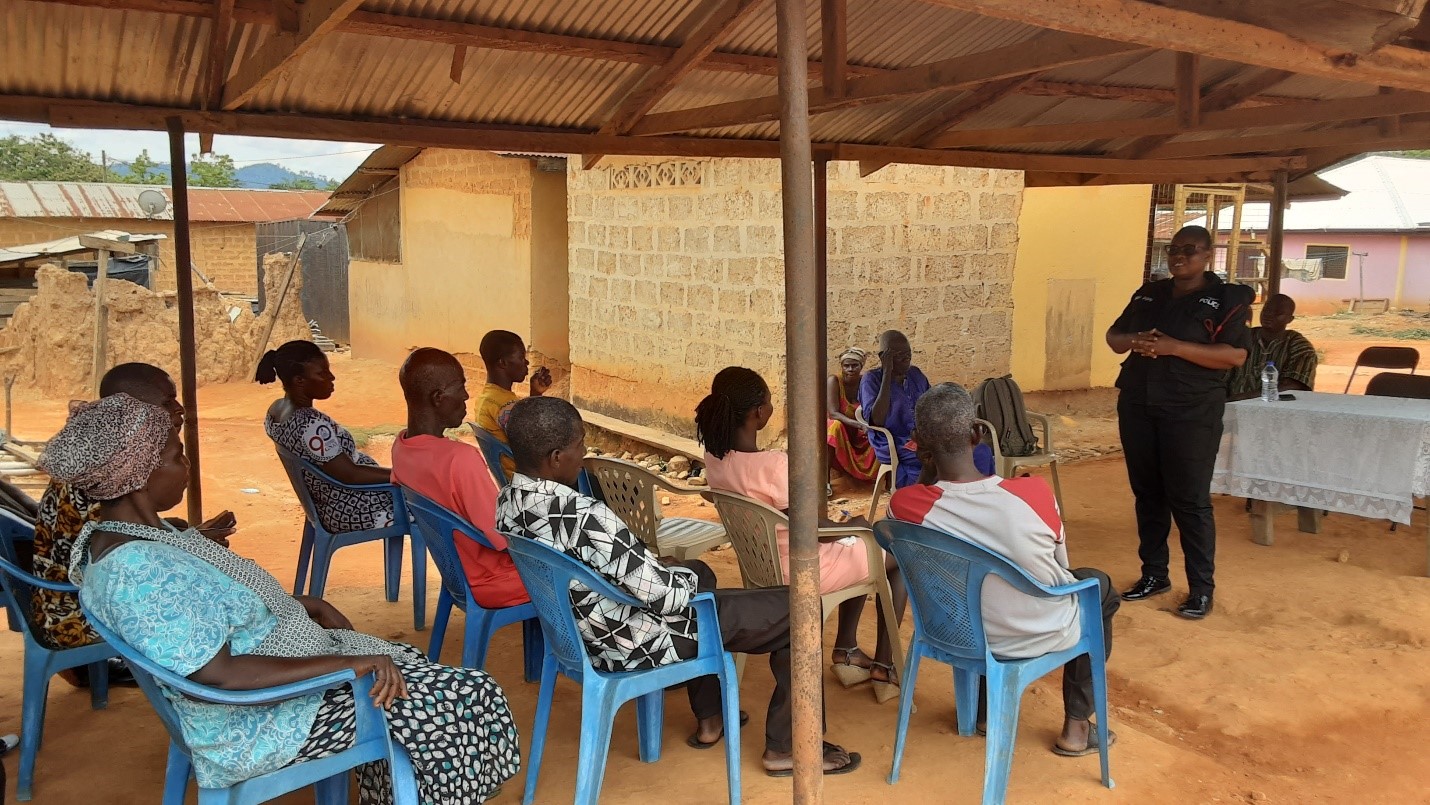
The District Assembly and other key stakeholders including CHRAJ and Ghana Police Service in collaboration with International Cocoa Initiative and its partners formed community grievances and surveillance committees in six communities across the district from 22nd May 2023 to 23rd May 2023.

The selected communities were Agogoso, Biakwaso, Bodwesango, Kojo Nkwanta, Pewodie, and Konsimwa.
The objective of forming the committee was to help address grievances facing farmers and their workers especially those in the cocoa farming sector. Again, the committee is to monitor and ensure that children are not used in labor work and workers are not forced into labor.
The committee members had already been trained by ICI and its partners. The exercise is to show the support of the District Assembly and introduce committee members to the communities. The committees have been trained to sit only on civil matters and misdemeanor criminal cases which would ensure peaceful coexistence among community members. The committees had been trained to refer issues beyond their control to the office of the Department of Social Welfare and Community Development.

The duties of a Community Grievances and Surveillance Committee include the following;
- Monitoring and Surveillance: The committee is responsible for actively monitoring and observing the farmers and their workforces to identify any grievances or issues related to various aspects such as safety, health, infrastructure, services, or social conflicts in their activities.
- Grievance Handling: The committee serves as a platform for farmers and their workers to voice their grievances, complaints, or concerns. They receive, document, and address these grievances, ensuring that appropriate actions are taken to resolve the issues.

- Mediation and Conflict Resolution: In situations where conflicts arise within the community, the committee plays a crucial role in facilitating mediation and promoting peaceful resolution. They act as intermediaries, listening to all parties involved and working towards finding mutually acceptable solutions.
- Collaboration with Local Authorities: The committee collaborates with local authorities, government agencies, and relevant stakeholders to address community grievances effectively. They communicate and advocate on behalf of the community, ensuring that concerns are heard and addressed by the appropriate authorities.
- Information Dissemination: The committee disseminates information to community members regarding their rights, available resources, and grievance-handling procedures. They promote awareness and empower individuals to voice their concerns and seek redress.
- Data Collection and Reporting: The committee collects and maintains records of grievances, complaints, and resolutions. They compile data and generate periodic reports to assess trends, identify recurring issues, and provide recommendations for improvements or policy changes.

- Community Engagement and Empowerment: The committee actively engages with the community, organizing awareness campaigns, workshops, and meetings to educate and empower individuals on their rights and responsibilities. They promote community participation and encourage residents to actively contribute to the betterment of their community.
- Advocacy and Policy Development: The committee advocates for policies and regulations that protect the interests and rights of the community. They provide input and recommendations for policy development and collaborate with relevant stakeholders to ensure effective implementation.
In conclusion, the program was successful and the committee is expected to vital link between the community and Adansi Asokwa District promoting transparency, accountability, and social cohesion. Their duties encompass proactive monitoring, grievance handling, conflict resolution, collaboration, information dissemination, data collection, community engagement, advocacy, and continuous improvement.